Edinburgh RoofingSpecialists
Request assessment

Chimney and leadwork roofing enquiries

Chimney stacks, abutments, valleys and flashings connect several materials. Describe the affected junction and interior position without assuming which detail has failed.

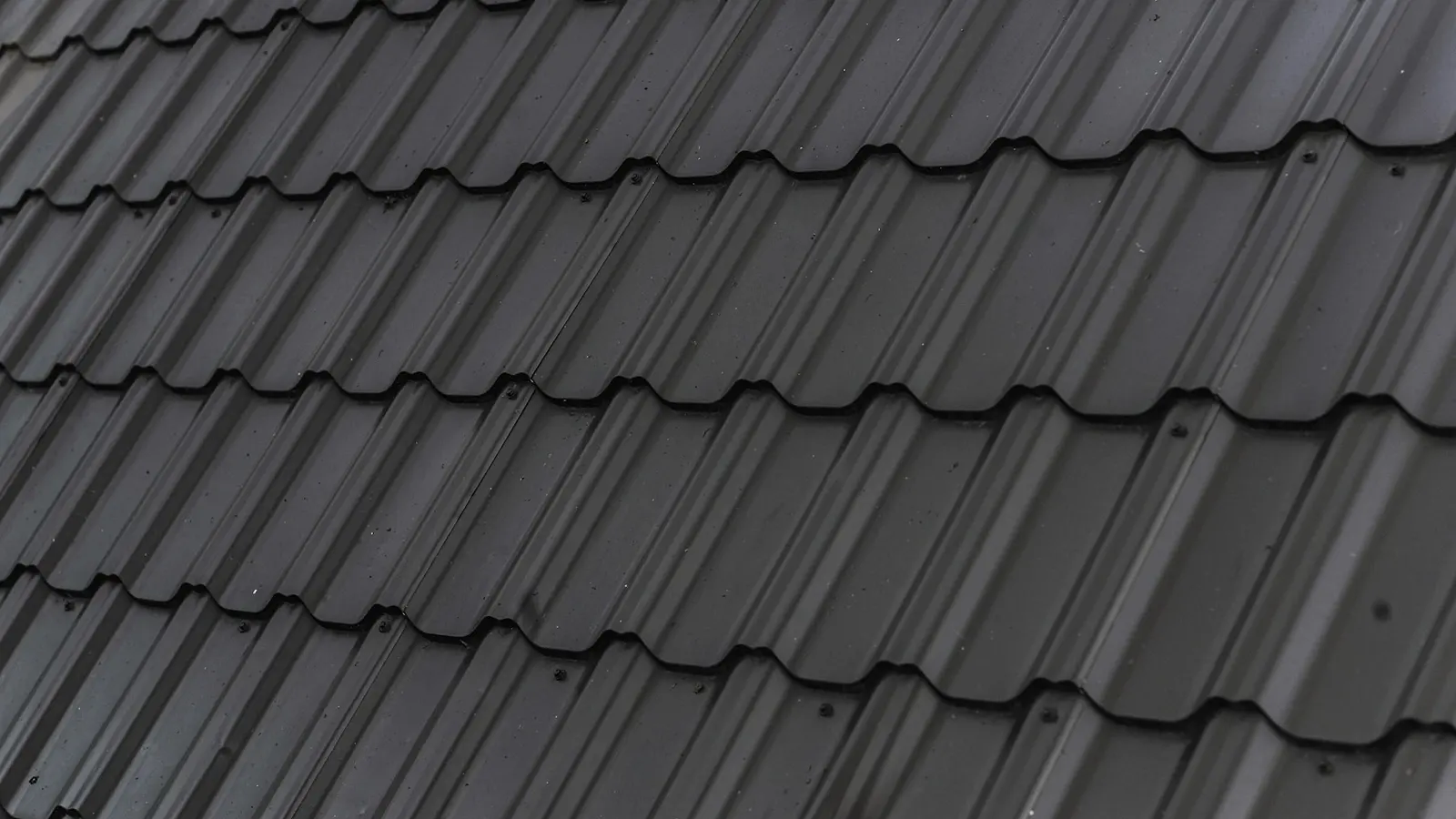
Close view of overlapping pitched-roof tiles and junctions
Roof covering

Junction evidence

Interior damp can relate to several nearby roof details

A damp chimney breast, ceiling mark beside a party wall or staining below a valley may involve coverings, flashings, masonry, pointing or another route. Record which face and storey are affected, whether a fireplace is in use, and how the symptom changes with weather. Do not conclude that leadwork alone is responsible from an indoor mark.

  • Identify front, rear or party-wall position.
  • Photograph the whole affected wall before close views.
  • Mention roof aerials, vents or adjoining extensions nearby.
Shared structures

Chimney ownership and access may involve neighbouring properties

A stack can straddle ownership boundaries or serve more than one dwelling, while access may cross a common roof. Tenement and shared-property enquiries should identify the coordinating owner, factor or manager and check title responsibilities. Consent from affected parties may be needed before access or changes are agreed.

  • State whether the stack appears shared.
  • Provide factor or owner-group details where authorised.
  • Do not arrange cross-property access without agreement.
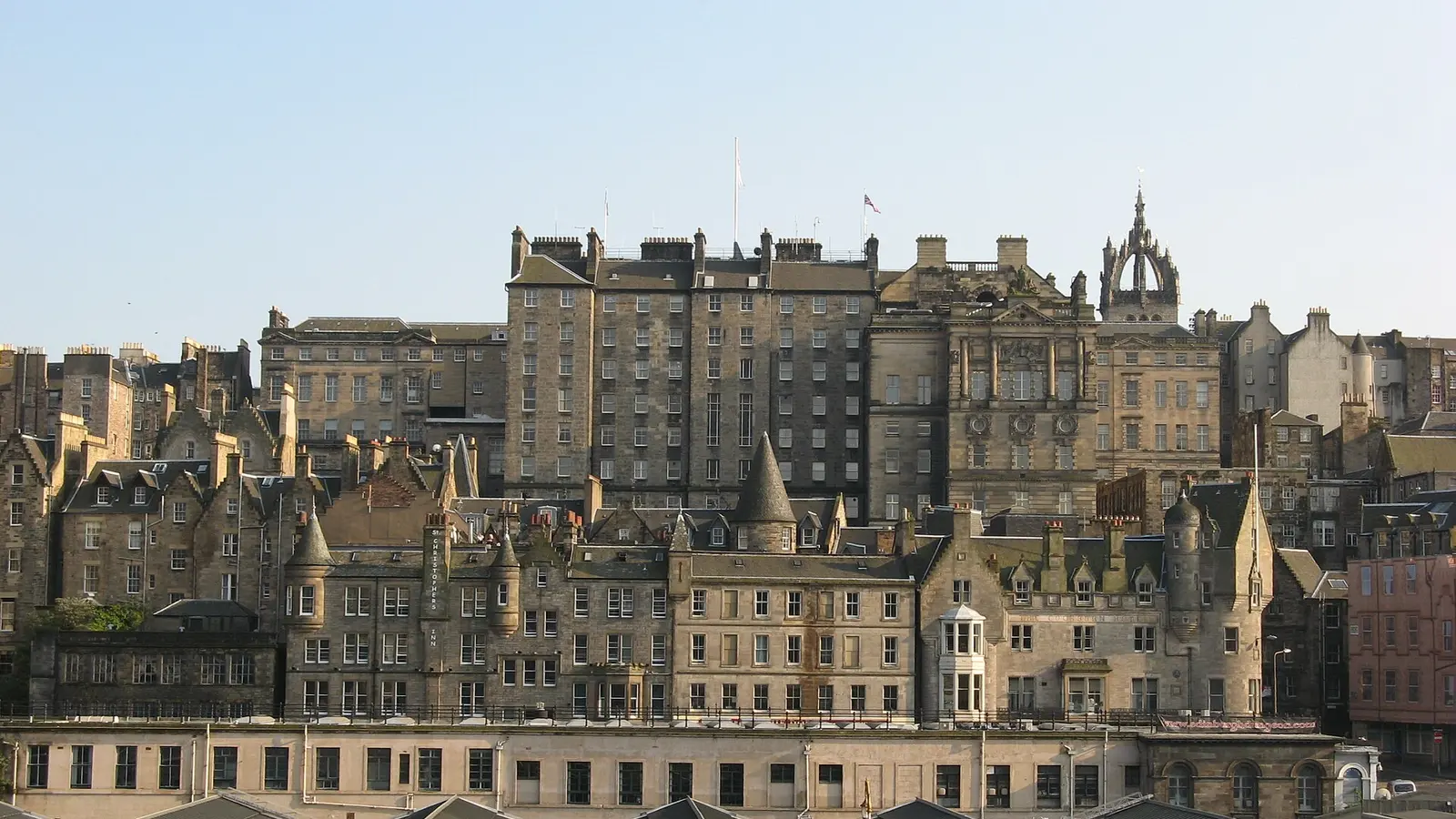
Edinburgh Old Town roofscape viewed across the city
Edinburgh roofs
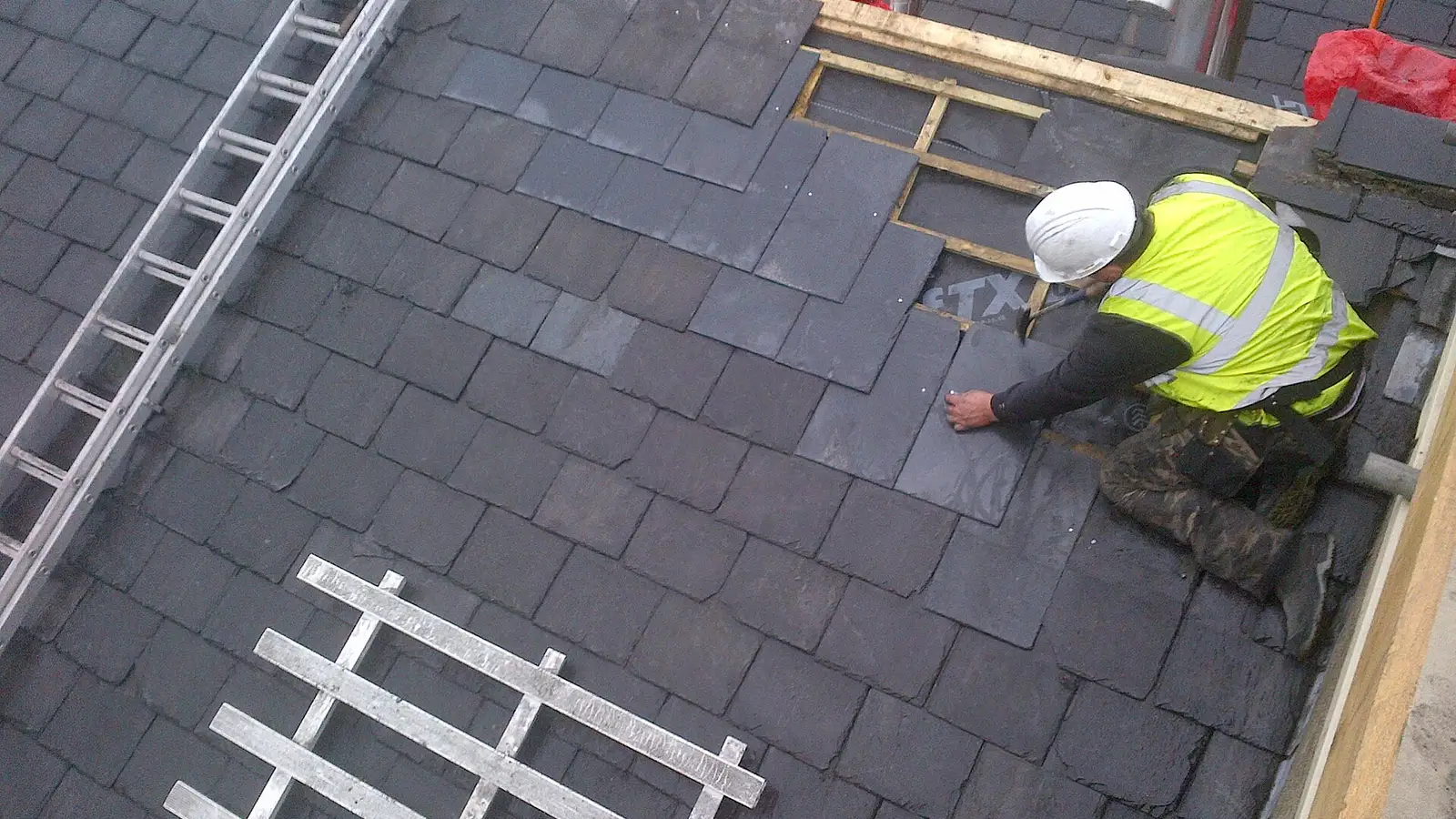
Roof slates being fitted in even overlapping courses
Slate detail

Traditional details

Lead, masonry and slate should be considered as a connected assembly

Traditional roof guidance treats flashings, skew details, ridges, slates and rainwater goods as parts of the roof fabric. Proposed alterations on a listed building may need consent, while compatible repairs require attention to existing materials and methods. Share building status and previous specifications before a material is selected.

  • Keep records of earlier chimney or flashing work.
  • Check council guidance before approving alterations.
  • Ask which adjoining materials are included in the assessment.

Safety boundary

Loose masonry and high-level details require controlled access

Do not inspect a chimney from a roof, ladder, parapet or unsafe loft opening. If fragments are falling, keep people away from the area below and use an appropriate urgent route where public safety is at risk. Ground-level debris and safe distant photographs can be recorded for an enquiry without approaching the hazard.

  • Establish a clear exclusion area below loose material.
  • Do not touch leaning pots, aerials or unstable masonry.
  • Describe immediate hazards before routine repair questions.
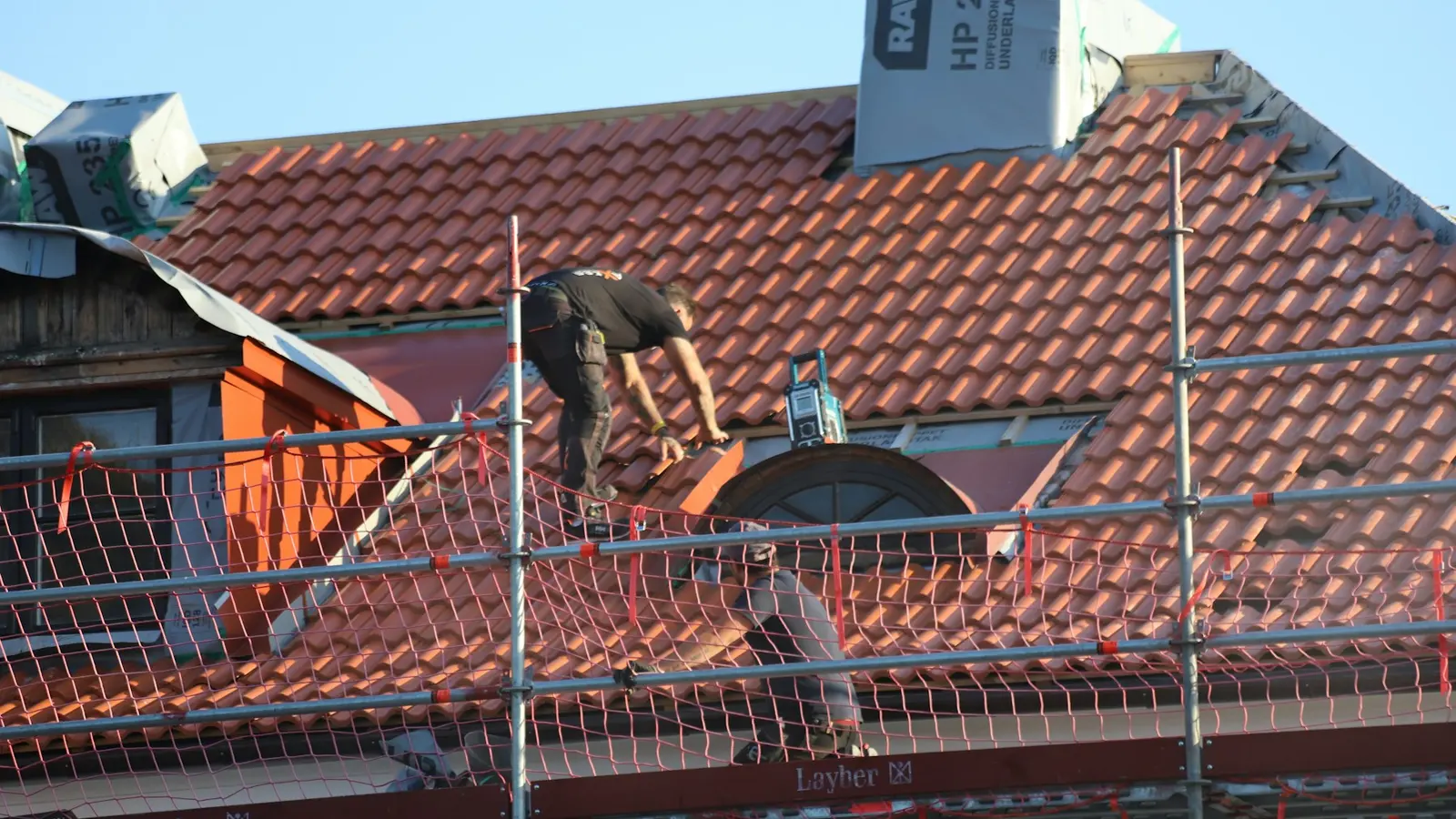
Worker examining a roof from secured access equipment
Safe access

Practical answers

Questions before an assessment

Does damp on a chimney breast mean the flashing has failed?

Not necessarily. Masonry, coverings, flashings, ventilation and other routes may need to be considered together.

Who is responsible for a shared chimney?

Responsibilities depend on ownership and title arrangements. Check title deeds and the relevant decision process rather than relying on this page as legal advice.

Can fallen mortar or masonry be handled?

Keep clear if more material may fall. Only record debris when it is already in a safe location and there is no risk from the structure above.

Next step

Ready to prepare the roof enquiry?

Request assessment

Tell us what you have noticed

Six short steps collect the details needed to route a roofing enquiry. Stay at ground level and never climb onto a roof to gather information.

Step 1 of 1